Just when you
think you’ve got contingency plans in place for everything,
we’re reminded that the unexpected is just that – unexpected.
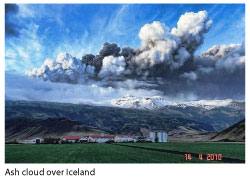
The volcanic ash that closed down much of European air space
this spring brought crisis management planning to the forefront
for travel managers.
The effects of the volcanic ash were staggering:
- 7 million passengers experienced disruptions
- 100,000 flights were grounded
- $1-2 billion in overall financial losses
- 80% of all companies affected
- $200,000 average cost per affected company
- 160 travelers stranded on average per company
- 5,600 corporate meetings cancelled
- 165,000 business trips cancelled
(figures from NBTA Foundation survey of NBTA-affiliated
companies)
This ash cloud was the largest transportation disruption
in Europe since World War II. A crisis of this magnitude proves
the value of travel management. “The immediate lesson
is the power of travel management at work. Travel managers
worked extended hours over many days to accommodate those who
were stranded,” said Mike McCormick, NBTA executive director
and COO.
“It was an interesting event in the fact that it was
primarily transportation related and it wasn’t a safety/security
issue. It really changed some dynamics around who led the charge
and how organizations’ crisis management plans dealt
with the issue,” said Bruce MdEndoe, president of iJet
Intelligent Risk Systems.
Partnering with travel management companies (TMCs) and airlines
became crucial in the efforts to not only accommodate travelers,
but communicate with them. “The communicating piece is
almost impossible to over-emphasize,” said Douglas DeBaltzo,
senior vice president of supplier management and corporate
travel services for Bank of America. To expedite communication
in the future, one change DeBaltzo has already incorporated
is the creation of communication templates. “The next
time the leadership team needs information, we can pop the
pertinent information in and it will take us 10 minutes instead
of a couple of hours.”
Another outcome at Bank of America is the creation of a new
system called “Watch, Warning, and Alert.” “Depending
on the severity of the incident and the number of travelers
impacted, we now have criteria around how engaged we are early
in the process,” said DeBaltzo.
In addition to analyzing their own responses to this travel
disturbance, companies are looking at the role their supplier
partners played and ways partnerships can be strengthened. “If
the airline is taking the lead on communicating that flights
have been cancelled and here’s the rebooking, should
I also be doing that or should I recognize that this is the
role of the supplier and build my process beyond that. There’s
greater opportunity from an industry perspective for us to
work together and really understand each other’s crisis
management philosophy and process – and then take a look
at our own to ensure we’re not duplicating,” said
Bottner.